Installation and handover: the day the work stops being a drawing
Public art installations are construction projects, and treating installation day as an art event is the commonest way a commission goes wrong at the last stage. The moment a foundation is dug, a work is lifted by crane or a footway is closed, the job sits under the same health and safety law and the same liability structure as any other site. Three consequences follow: somebody holds the client duties, somebody writes and checks the method statement, and the date the work becomes the commissioner's problem rather than the artist's is fixed in writing beforehand.
Installation covers four pieces of work collapsed into one word: preparing the site and its foundations, placing the work, commissioning anything electrical, and handing over the documentation. The last is the one that gets skipped.
Siting and groundworks: what happens under the visible object
Siting and groundworks decide the cost of the whole installation phase, and they are settled long before the work arrives. A freestanding sculpture normally sits on a reinforced concrete pad sized by a structural engineer against the weight of the piece and the wind load on its exposed area, with holding down bolts cast in or resin anchors drilled to the fabricator's fixing schedule. A tall plate steel form with a large sail area can impose more load through wind than through its own mass, and the foundation is designed for the worse of the two. Four site facts have to be settled before the design is frozen:
- Locate every buried service, with searches from the statutory undertakers, a cable avoidance survey, and trial holes where the drawings are ambiguous.
- Establish ground conditions, since made ground or a raft over a basement turns a simple pad into an engineered solution, a five figure difference.
- Confirm access for plant: the gate, the turning circle, the overhead cables and the ground bearing capacity under a crane's outriggers. A work that cannot reach its plinth is a design failure, not a delivery problem.
- Detail the drainage, because a joint that lets water sit will stain and corrode within two winters.
Method statements, risk assessments and CDM duties
Method statements and risk assessments, bundled together and called RAMS, describe how the installation will be carried out and what could hurt somebody while it is. They are produced by the contractor, reviewed by the principal contractor, and read by the client before work starts. Accepting a two paragraph method statement from a fabricator who has never worked on a public site is accepting an invisible risk.
The Construction (Design and Management) Regulations 2015 apply to construction work in Great Britain, and a public art installation is construction work. They allocate duties to the client, the principal designer, the principal contractor, designers and contractors. Three points catch first time commissioners:
- Hold the client duties knowingly. The commissioner is the client under CDM and cannot delegate that status, only the tasks: making suitable arrangements, allowing adequate time and resources, and ensuring a health and safety file is prepared.
- Recognise that the artist is a designer. An artist who determines form, materials and fixings carries designer duties whether or not they have heard of them.
- Appoint in writing where more than one contractor is involved. A fabricator, a groundworker and a crane firm on one site is more than one contractor, and the principal designer and principal contractor appointments become mandatory.
Notification to the Health and Safety Executive is required where work lasts longer than 30 working days with more than 20 workers on site at once, or exceeds 500 person days. Most art installations fall well below that, and the duties do not depend on it.
Lifting, traffic management and the installation day
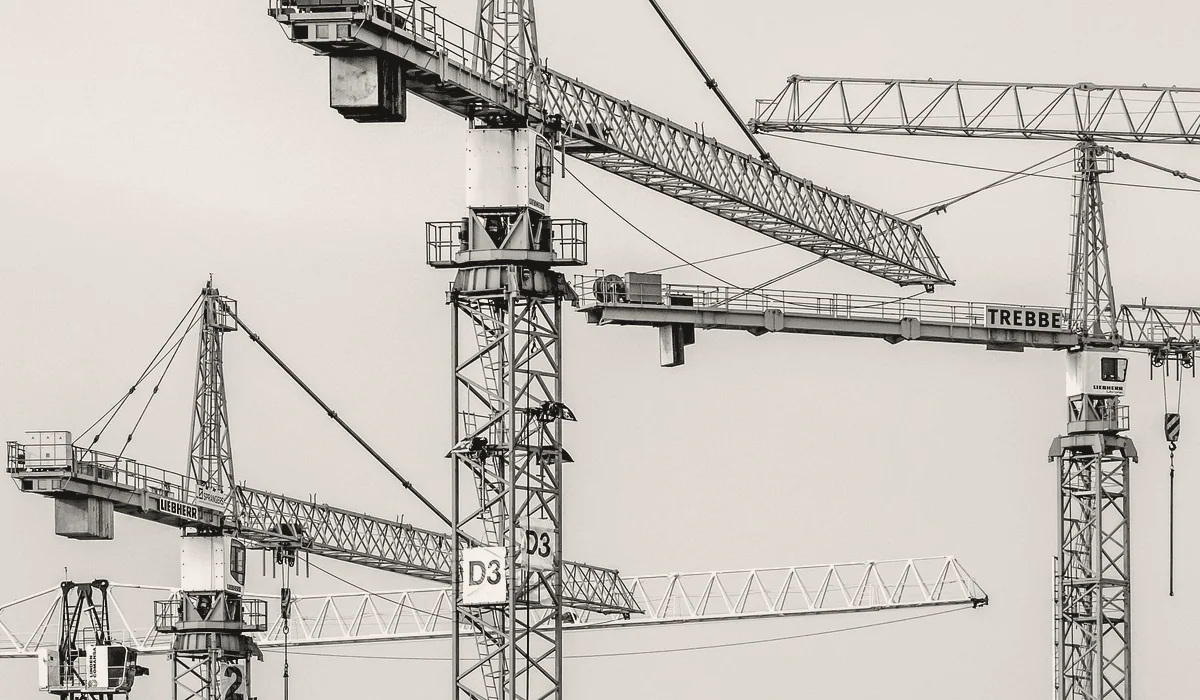
Lifting is the highest risk operation of the day. Lifting equipment and lifting operations are separately regulated, and plans are prepared by a competent appointed person. The lift is either a contract lift, where the crane company plans and executes it, or a hired in plant arrangement, where responsibility stays with the hirer; the contract lift is the safer purchase for most commissioners, because it puts the planning duty with the people who own the crane. The plan covers weight and centre of gravity, the lifting points designed in by the fabricator, slings and shackles, ground bearing pressure, exclusion zones and wind limits. Cranes stop working in wind well below the point where it feels dramatic on the ground, so a marginal forecast is a reason to move the date.
Work beside an adopted road brings traffic management, often a temporary traffic regulation order, which commonly takes six to twelve weeks to confirm, plus signed and lit pedestrian diversions. Where the site is a school, a hospital or a station, the host's operating hours push installation into a weekend or a night, which belongs in the price.
Temporary public art installations cut the groundworks, not the duties. A ballast frame, a hoarding piece or a projection has no foundation, yet still needs a wind and stability calculation, a fixing method that will not damage the host structure, an agreed removal date and a written arrangement for who takes it down. The absence of a foundation persuades people that the absence of paperwork is acceptable too.
The handover pack, and the moment liability transfers
The handover pack turns a finished object into a maintainable asset, and it should be listed clause by clause in the contract so it cannot be negotiated down to a photograph and a thank you letter. It contains:
- As built drawings with the engineer's calculations and sign off, foundation details, the fixing schedule, and a photographic record of the buried elements before covering.
- Materials and finishes schedule, naming the alloy, stone, timber species, coating system, colour references, batches and suppliers.
- Maintenance manual, giving the cleaning method, the products that must not be used, the inspection interval and the expected coating life.
- Electrical certification for any powered element, with enclosure ingress protection ratings, luminaire and driver specifications, and spares.
- Warranties from the fabricator, the coating applicator and any equipment supplier, with expiry dates.
- Health and safety file under CDM, covering residual risks a future maintenance or removal team needs, such as confined voids, weight and lifting points.
- Copyright licence and moral rights position, recording what the commissioner may reproduce and how the artist is credited.
Liability transfers at a defined event the contract has to name: usually practical completion, or a certificate of acceptance signed after a joint inspection and the clearing of a snagging list. Before it, risk in the work sits with the artist or contractor and their insurance. After it, the work is the commissioner's asset, on the commissioner's insurance, with the commissioner's maintenance obligation running. A defects liability period, commonly twelve months and sometimes twenty four, follows and requires the maker to put right defects in workmanship or materials, which is a different thing from wear, vandalism or accidental damage. Retention of part of the contract sum, often five per cent released in two halves, makes that obligation real. The transfer date matters more than the percentage: with no signed acceptance certificate, nobody can say whose insurer pays when the work is hit by a lorry in week three.