What a public art commission is, and how it differs from buying art
A public art commission is an agreement to make a work that does not exist when the money is agreed, designed for one named place and answering a written brief, which means the commissioner is buying a process and a risk, not an object. Buying an existing work is a transaction with a known outcome: the thing is there, it can be looked at, and the only questions are price, condition and transport. Commissioning is the opposite. The commissioner pays first, sees drawings second, and sees the work last.
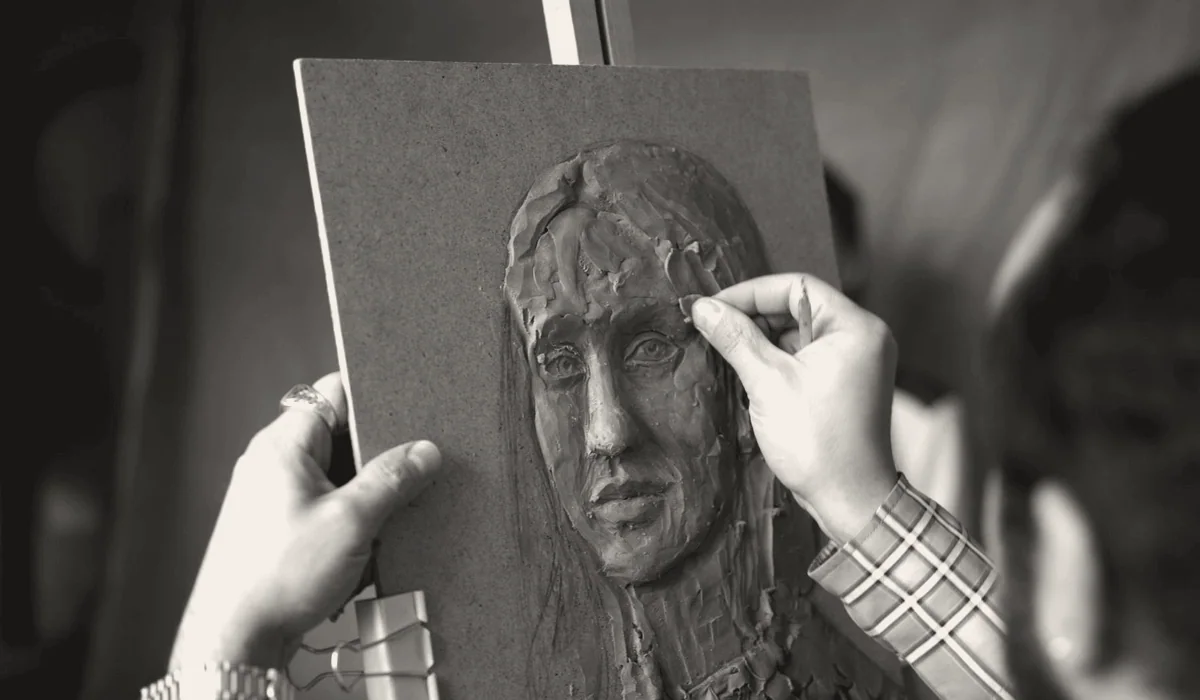
That distinction is not pedantry. It decides who carries the cost when a material behaves badly, who decides whether the finished work matches the proposal, and who owns the right to reproduce a photograph of it five years later.
What a commission buys that a purchase does not
A commission buys five things a purchase does not, and every one of them has to be written down somewhere. It buys the artist's time to respond to a specific site rather than a general subject. It buys a design that has not been tested and might not survive engineering. It buys a manufacturing programme with a lead time. It buys the right to influence the outcome through an approval process. And it buys the risk that the outcome is not what anyone imagined, which is the reason a commission has stages, gates and a contingency line while a purchase has an invoice.
The uncomfortable consequence is that a commissioner cannot fully specify what they are buying at the moment they agree to buy it. That is the trade. In exchange, the work is made for that place, at that scale, in a material chosen for that weather, addressing that audience, which is something no existing work can do except by coincidence.
Commissioning against buying: the differences that matter
| Question | Buying an existing work | Commissioning |
|---|---|---|
| Does the work exist when money is agreed? | Yes | No |
| Who carries the risk of failure? | Seller, until handover | Shared, and only as the contract allocates it |
| Is the price fixed? | Yes | Fixed only against an approved design and specification |
| How long from decision to delivery? | Days to weeks | 4 to 6 months for a small temporary work, around 18 months for a permanent one |
| Who decides it is finished? | Nobody, it already is | A named approver, against the proposal and specification |
| What documents are needed? | Invoice, provenance, condition report | Brief, proposal, contract, consents, handover pack, maintenance schedule |
| Who owns the copyright? | Usually still the artist | Usually still the artist, unless assigned in writing |
The last row surprises first-time commissioners most reliably. Under the Copyright, Designs and Patents Act 1988 the author of a work is the first owner of copyright, and paying for a commission does not transfer it. Copyright moves only by written assignment, and moral rights, including the right to be identified as the author, sit with the artist and last for the copyright term, which runs for seventy years from the end of the year of the artist's death.
Why "public" changes the definition again
Public art commissioning adds four conditions that private commissioning does not carry. The work will be seen by people who did not choose to see it, so consultation and objection are part of the process rather than an interruption to it. The work sits on land somebody else owns or manages, so consents and permissions apply. The money is often public or planning-derived, so procurement rules, audit trails and published criteria apply. And the work is expected to survive outdoors for decades, so engineering, materials and a maintenance liability apply.
A privately commissioned painting for a hallway involves none of that. A commissioned work in a town square involves all four before an artist has drawn anything. This is why a public art commission has stages that look bureaucratic from outside: each one exists because a different party has a legitimate claim on the outcome.
Open commission, limited commission, direct appointment
Three phrases recur in UK opportunity notices and they describe how the artist was found, not what kind of work is wanted.
- Open commission means the opportunity is advertised publicly and any artist meeting the stated eligibility may apply. It reaches the widest field and generates the most administration, sometimes several hundred submissions for one commission.
- Limited or invited competition means a small number of artists, commonly three to five, are shortlisted and paid a fee to develop competing proposals. It costs the commissioner more up front and produces genuinely comparable options.
- Direct appointment means one artist is approached, usually because their existing body of work already answers the site. It is fast, and it is the route most likely to be challenged if the money is public and the reasoning was not recorded.
None of these is inherently fairer than the others. What makes a route defensible is that the criteria were written before the applications arrived and the decision was recorded against them.
What the commissioner actually owns at the end
At handover the commissioner normally owns the physical work and a licence to use images of it, and the artist normally retains copyright and moral rights. Both positions are default rather than automatic, and a contract can move either. Three practical entitlements are worth naming in the agreement rather than assuming: the right to photograph the work for the commissioner's own publicity, the right to relocate or remove it and on what notice, and the right to carry out repairs without the artist's consent.
There is a statutory backstop for photography. Section 62 of the Copyright, Designs and Patents Act 1988 permits photographing, filming and drawing sculptures and works of artistic craftsmanship that are permanently situated in a public place or in premises open to the public, and publishing those images. That covers the passer-by with a phone. It does not settle what the commissioner may do commercially, which is a contract question.
What a public art commission is not
A public art commission is not a purchase order for decoration, and briefs that treat it as beautification tend to produce work that reads as an afterthought because it was one. It is not a competition the artist enters at their own expense past the first stage, since developed design work is paid work. It is not finished at installation, because the maintenance obligation outlives everyone who signed the contract. And it is not the same activity as the private illustration commission, where a client pays an artist for a drawing at an agreed price, which shares the words and almost nothing else.