Who looks after it: maintenance, conservation, and what happens when it comes down
Public art conservation is an obligation with a hundred year horizon funded on a three year budget cycle, and that mismatch is the defining problem of the subject. The commission is a project with a start and an end. The artwork is an asset with neither. What happens to it is decided by two things settled before installation: whether money was set aside, and whether the obligation was written into a document that outlives everyone who signed it. Three questions test whether a work is being looked after: who owns it, who holds the budget line, and who inspects it. A commission that cannot answer all three at handover has produced an orphan.
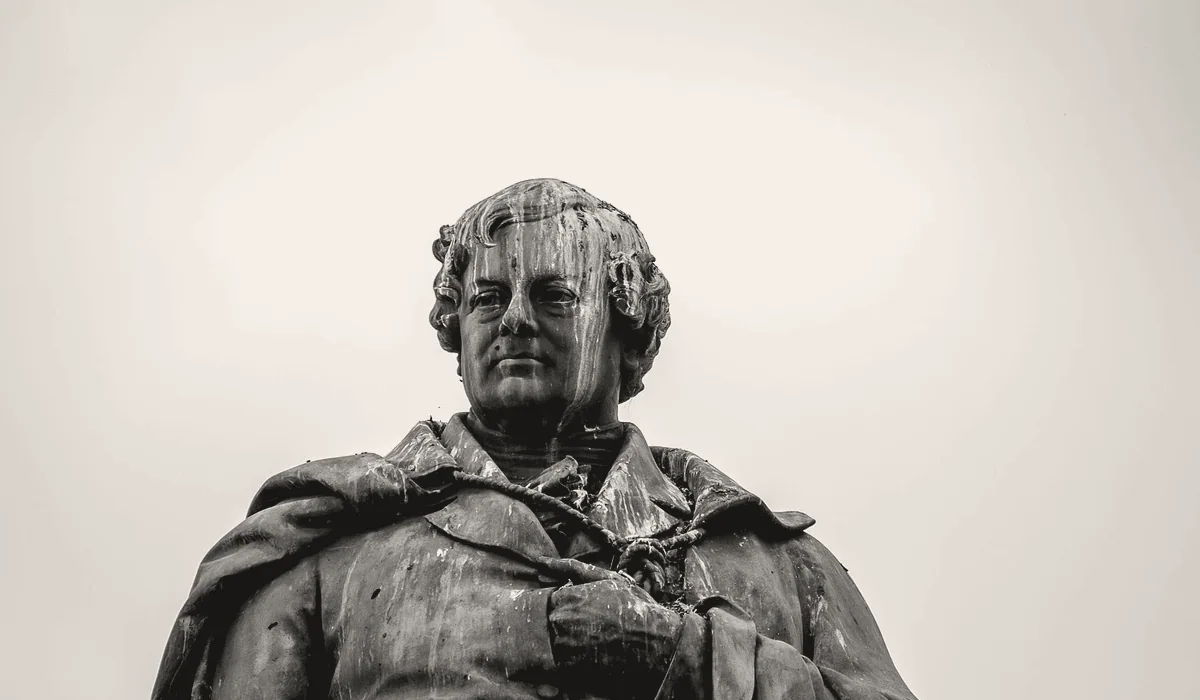
Who inherits the obligation, and how it gets lost
The obligation is normally inherited by the landowner, because a permanently fixed artwork is usually treated as part of the land it is fixed to, and the landowner is rarely the department that ran the commission. Whether a particular work has become a fixture turns on how firmly it is annexed and why, so a bolted-down piece is not automatically part of the land, and where that question matters it is worth settling in writing at handover rather than arguing about it later. A piece from a regeneration team passes to a housing landlord; one in a park passes to parks and open spaces; one on a hospital site passes to estates. None of those teams was in the room when the maintenance manual was written, and none has a budget line for sculpture.
Three transfers destroy the memory of an obligation: staff turnover removes the person who knew, reorganisation dissolves the team holding the file, and land disposal hands the asset to an owner who never read the schedule. The defence is documentary rather than personal: a public art register carrying one line per piece for artist, year, location, materials, owner, insurer, copyright, inspection interval and a condition grade on a four point scale, a maintenance clause binding successors in title, and the handover pack lodged institutionally. Where the work was funded through a planning obligation, the maintenance requirement and any commuted sum belong inside that obligation, so the duty runs with the land rather than a department's goodwill.
A maintenance schedule by material
Maintenance intervals follow the material, not the artwork, and the spread is wide enough that a generic schedule is worthless. The intervals below suit UK conditions: wet, salty near any coast, and subject to freeze and thaw cycles that damage more than frost alone.
| Material | Inspection | What actually goes wrong | Renewal |
|---|---|---|---|
| Bronze | 12 months | Patina breaks down unevenly, copper runoff stains the plinth, bird fouling etches, chloride attack accelerates near the coast, small works go for scrap | Microcrystalline wax, 1 to 2 years |
| Painted steel | 6 to 12 months | Coatings fail at welds, cut edges and water traps, corroding underneath; ground level chipping comes from strimmers, not vandals | Full recoat, 10 to 20 years |
| Stone | 12 to 24 months | Soiling, biological growth, salt crystallisation, freeze thaw spalling, failed joints, rust jacking where old iron cramps split the stone | Repoint in a weaker mortar as joints fail |
| Timber | 6 to 12 months | Rot at ground contact and end grain, decay in trapped joints, splitting as the section dries, fixings loosening | Re-oil 1 to 3 years; life 10 to 25 years |
| Mosaic | 12 months | Tesserae lift and are lost, grout fails, water behind the bedding lets frost push sections off, substrate movement cracks panels | Refix from original batch spares |
| Painted mural | 6 to 12 months | Ultraviolet fading, worst in reds; damp behind the wall; render spalling; graffiti; repainting by an owner never told it was a commission | Anti-graffiti coating after each clean; repaint or retire, 5 to 15 years |
| Electronics and lighting | 1 to 3 months in use | Water ingress at seals, controllers obsolete before the fittings, colour shift across an array, power switched off during other works and never restored | Control gear, 5 to 10 years |
Conservation is a different activity from maintenance. Maintenance is the scheduled cleaning, coating and tightening that holds a work in its handover condition. Conservation is what is needed once that has failed, carried out by a trained conservator to a condition report and treatment proposal. A commissioner who calls in a conservator for maintenance pays too much; one who lets a maintenance contractor attempt conservation, by sandblasting a patina or repainting a mural freehand, has destroyed the work while trying to help.
Insurance, and the asset nobody added to the schedule
Insurance divides into two covers. Cover for the work itself, against damage, vandalism and theft, turns on whether the sum insured is replacement or indemnity, since a unique commissioned object has no market replacement and its valuation must be agreed. Cover for harm the work causes to other people is public liability, and belongs to whoever owns the land. Both need the artwork on a schedule, and that is the step that gets missed: a piece can stand for a decade without appearing on the insurance record, and the omission surfaces at the claim.
Deaccessioning: relocation, contested works and removal
Removal is a normal end for a commission rather than a failure, and most works installed today will not stand in fifty years: materials fail, sites are redeveloped, opinion changes. There is no statutory deaccessioning regime for art in public places in the United Kingdom. Museum collections follow accreditation rules on disposal, but a sculpture on a street is rarely accessioned into one, so the only rules are the contract, the owner's policy and the site's consents. Four routes exist when a work has to go.
- Relocate the work, the least damaging and most expensive outcome: new foundation, new consents, often refabricated fixings.
- Retain and reinterpret the work, where the objection is to meaning rather than condition.
- Remove and store the work, honest only if a storage location and a review date exist, since indefinite storage is delayed destruction.
- Dismantle and record the work, depositing the documentary record in a local archive.
Contested works raise the question of who decides, and the answer is the owner, subject to consents and to the contract. A defensible process needs a documented decision by the accountable body, a consultation open about the range of outcomes, and a written record of the reasoning. Removing a work quietly overnight and removing it after a published decision produce the same physical result and very different institutional positions.
Copyright and moral rights survive removal. Copyright in the design stays with the artist unless the contract assigned it, and lasts for the artist's life plus seventy years under the Copyright, Designs and Patents Act 1988, so publishing photographs afterwards is still a licensing question. The moral right of integrity protects against derogatory treatment of the work. Treatment means an addition to, deletion from, alteration to or adaptation of the work, and not every treatment is derogatory: the right engages only where the treatment amounts to a distortion or mutilation of the work, or is otherwise prejudicial to the honour or reputation of the author. A sympathetic repair is a treatment and is not usually derogatory; a recolouring, a truncation or a relocation that makes the work look absurd may well be. It does not, under United Kingdom law, give an artist the right to prevent outright destruction, which surprises artists and reassures owners equally. Five things the contract should already have said are almost never in it: how many years the work stays in place, what notice the artist gets, whether the artist may take it back, who pays for removal, and whether the artist's name comes off if the work is altered rather than removed.