The artist on a public commission: designer, contractor, and public face
The artist on a UK public art commission is contracted for seven deliverables, and only one of them is the artwork: the finished work itself, a design that can actually be built, the technical information the engineer and fabricator need, health and safety information for the project file, attendance at consultation and panel meetings, written maintenance information for the eventual custodian, and, frequently, appearing in public when the work is unveiled. A public art commission is an agreement to make something that does not yet exist, for a named place, against a written brief, and the agreement buys a process rather than an object.
Designer before maker
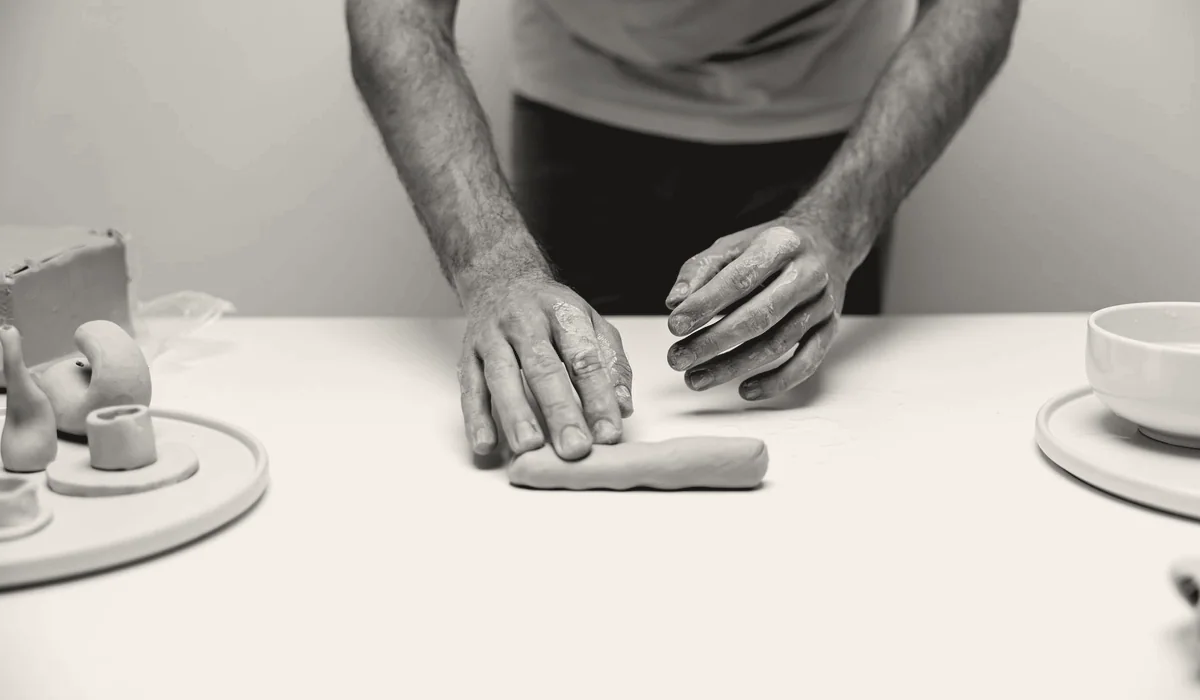
The artist designs first and makes second, and on most commissions above a modest scale the making is done by somebody else. That reordering changes what the artist is responsible for. A design produced for others to build has to carry dimensions, materials, finishes, tolerances, fixing details and a foundation assumption, and it has to survive the engineer who checks it and the fabricator who prices it.
It also brings a legal duty. Under the Construction (Design and Management) Regulations 2015, anyone who prepares a design for construction work is a designer, and designers must eliminate foreseeable risks so far as is reasonably practicable and provide information about the risks that remain. An artist producing a design for a structure that will be built on a construction site is caught by that whether or not the word designer appears anywhere in their contract. In practice it means three things: expect to answer questions about how the piece is installed and how it is later inspected, expect to provide information for the health and safety file, and expect the engineer to change something.
Contractor on somebody else's programme
The artist is a contractor as well as a designer, and the commission agreement treats them as one. Five contractual features surprise artists whose previous work has been for private buyers.
- Stage payments replace a deposit and a balance, with each payment released against a defined milestone such as approved design, fabrication commenced, delivery to site and practical completion.
- Retention holds back a share of the price, commonly around 5 per cent, until a defects period of six to twelve months has passed without a problem.
- Insurance is specified rather than assumed, typically public liability and, where the artist produces designs others build, professional indemnity, both at levels the commissioner names.
- Programme is set by the construction schedule, so an artist's access to site, and their completion date, move when the main contractor's dates move.
- Site rules apply on any live site, meaning inductions, method statements, risk assessments and permits, and an artist who cannot produce those cannot get through the gate.
Where the artist holds the fabrication contract rather than the commissioner, the exposure grows again: the artist is then the party a fabricator's overrun or insolvency lands on. Which of the two arrangements applies is usually decided in the brief, and it is worth establishing before pricing anything.
What the artist keeps
Copyright stays with the artist by default. Under the Copyright, Designs and Patents Act 1988 the author of an artistic work is the first owner of copyright, and a commission does not transfer it: the copyright moves only if the artist assigns it in writing. What a commissioner normally needs, and normally gets, is a licence to photograph and reproduce the work for its own purposes, which is a narrower thing and should be written as such.
The same Act gives moral rights. The right to be identified as the author has to be asserted in writing, so the assertion belongs in the commission agreement rather than in an assumption. The right to object to derogatory treatment of the work is the one that matters over a long life, though it engages more narrowly than artists expect: an alteration is a treatment, and the right bites only where the treatment distorts or mutilates the work or is otherwise prejudicial to the artist’s honour or reputation, and it sits alongside, not instead of, the practical question of who is allowed to move or remove the piece. Copyright itself runs for the author's life plus seventy years.
One provision routinely misunderstood by both sides: section 62 of the same Act permits the photographing, filming and drawing of sculptures and works of artistic craftsmanship permanently situated in a public place, and the publication of those images. An artist cannot prevent the public photographing a permanently sited outdoor work, and a commissioner cannot cite that provision as a reason to skip asking for a licence for its own promotional use of images it commissioned.
Public face
The artist is also the public face of the commission, and the brief will quietly assume it. Four obligations recur: attending consultation sessions with residents, schools or user groups; supplying text and images for the commissioner's publicity; being available to local press; and appearing at the unveiling. Each takes days that have to be inside the fee, and each is a reason to count the meetings named in the brief before quoting.
Being the public face also means absorbing the reaction. Public work attracts criticism in a way private work does not, the criticism is frequently about the money rather than the art, and the commissioner is not obliged to defend the artist in public unless the agreement says so. Two protections are worth asking for: a named contact at the commissioner who handles press, and an agreed line on cost that both parties use, so that a figure quoted out of context does not become the story.
What belongs outside the artist's liability
Four things are outside the artist's control and should be outside their responsibility, and each needs a clause rather than a conversation.
| Risk | Who should carry it | Why |
|---|---|---|
| Ground conditions and foundation design | Commissioner and engineer | The artist cannot survey land they do not own |
| Final siting decisions | Commissioner and landowner | Location is a planning and land matter |
| Vandalism and accidental damage after handover | Custodian, through insurance | The work has left the artist's control |
| Later alteration, relocation or removal | Custodian, with the artist notified | Deaccessioning is a policy decision, but moral rights still apply |
The counterpart is what the artist should carry and often tries to avoid: a design that meets the brief, materials fit for the exposure they were specified for, workmanship where the artist made the piece themselves, and a defects period during which genuine failures are put right. A commission agreement that allocates those eight items clearly, the four in the table to the other side and these four to the artist, prevents most of the arguments that public art commissions actually produce.
The handover pack
The last deliverable is paperwork, and final payment usually depends on it. A complete pack names the materials and their suppliers, the finishes and their reapplication intervals, the fixings and how to inspect them, the cleaning method and the products that must not be used, the structural calculations and the engineer who produced them, the warranties and their expiry dates, and a set of photographs of the completed work. It is written for somebody who has never met the artist and will read it in fifteen years, which is the right test for every sentence in it.