Community art projects: consultation, co-design, and the difference between them
Community art projects are commissions in which the people who live with the work take part in making or shaping it, and they divide into three honest levels: consultation, co-design and co-production. The three are routinely described with the same word, participation, and they are not the same thing. Consultation asks people what they think. Co-design gives them a decision. Co-production puts the work in their hands. A commissioner who promises one and delivers another loses the community's goodwill on the next project as well as this one.
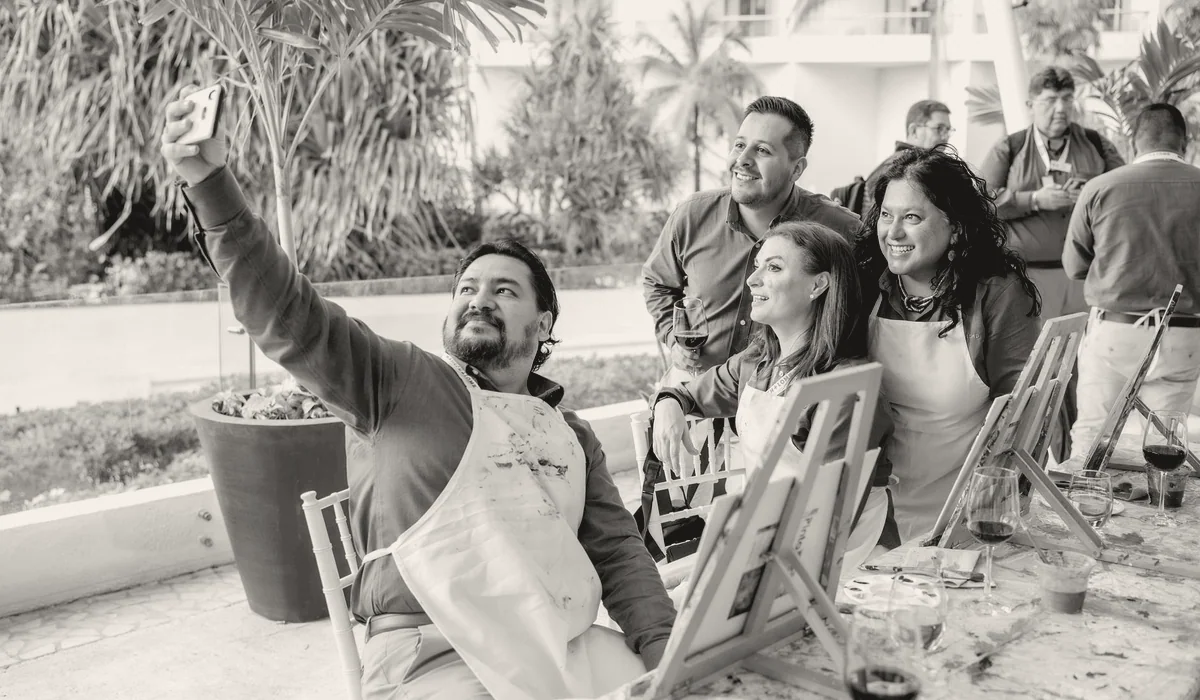
The distinction matters because it decides three practical things: when the participation happens in the programme, what it costs, and what the artist is actually contracted to deliver.
The three levels of participation, and what changes at each
Each level of participation transfers a different amount of control, and the honest test of which one you are running is simple: name the decision the participants can change, and name what happens if they say no.
| Level | When it happens | What participants control | Share of commission budget |
|---|---|---|---|
| Consultation | Before or just after the brief is written | Content, theme, siting preferences; they advise, the commissioner decides | 2% to 5% |
| Co-design | Between artist appointment and design freeze | At least one binding decision written into the brief | 10% to 20% |
| Co-production | Through fabrication | Physical elements they make that appear in the finished work | 20% to 40% |
The budget shares in the last column are working ranges, not a rate card, and nothing publishes a rate for this. Three things move a project inside its band: how many sessions there are and whether the artist runs them or a paid facilitator does, whether participants make physical elements that then have to be fired, framed, fixed or made safe for permanent installation, and what access costs are needed for the people being invited, since interpretation, transport and childcare decide who can actually attend. Note too that these shares come out of the commission budget rather than being added to it, so a participation programme at the top of its band is taking money from the artist fee, the management line and the making.
Sherry Arnstein's 1969 ladder of citizen participation is still the clearest frame for this. It set out eight rungs running from manipulation at the bottom, through consultation in the middle, to citizen control at the top, and its central argument was that being asked is not the same as having power. More than fifty years on, most public art participation still sits on the middle rungs, and there is nothing wrong with that as long as it is described accurately.
Where participation genuinely changes a commission
Participation changes a commission in six places, and all six are decisions that outsiders cannot make correctly from a desk.
- Siting. Residents know which corner floods, where the sun lands at four in the afternoon, and which route the schoolchildren take. Siting is the single decision that most often improves through consultation.
- Content. Local history is held locally, and the version in the archive is often not the version people recognise. Getting a name, a date or an omission wrong in a permanent work is close to unrecoverable.
- Durability. A caretaker will tell you where the ball hits the wall, where the bikes get chained and which surface gets climbed. Those answers change the material specification.
- Wording. Any text on the work, and the title, benefit from being tested with the people who will read it daily.
- Custodianship. A group that has made part of a work will often take on cleaning or reporting damage, which is worth more over ten years than the workshops cost.
- Whether to proceed at all. A genuine consultation includes the possibility that a place would rather have the budget spent on something else, and occasionally it says so.
Where participation is decoration on a decision already taken
Participation becomes decoration when the decision has already been made, and there are six reliable warning signs. Watch for consultation that opens after the artist is appointed and the design is developed. Watch for a consultation with no budget line, which means nobody has been paid to run it or to act on it. Watch for a single drop-in session in a library on a weekday afternoon, counted as engagement. Watch for questions offering only preferences between options the commissioner is equally happy with, such as three colourways. Watch for feedback with no route back into the brief. And watch for a report that gives attendance figures and no changes made.
This pattern is common and usually not cynical. The funding trigger, whether a planning obligation or a capital programme, fixes the site, budget and timescale long before anyone talks to residents, so by the time the community is in the room the only variables left are cosmetic. The remedy is not more consultation events. It is moving the conversation earlier, into the strategy and the brief, where the variables still exist.
What participation costs, and the lines it needs in the budget
Participation costs real money and it fails when it is treated as a free by-product of the artist's time. A properly resourced participation programme carries seven costed lines: the artist's workshop days at the same rate as their studio days, a freelance facilitator or community organiser who already has the local relationships, venue hire, materials and refreshments, background checks, insurance and risk assessment, and access costs such as interpretation, transport or childcare that determine who can actually turn up.
Background checks differ across the UK, and all three regimes have a different name and a different administering body. Work that counts as regulated activity with children or with vulnerable adults requires a Disclosure and Barring Service check in England and Wales. Work with children or protected adults in Scotland requires membership of the Protecting Vulnerable Groups scheme, administered by Disclosure Scotland, and protected adults is the Scottish term, not a description of the English regime. In Northern Ireland the check is run by AccessNI. Build the lead time for whichever applies into the programme, because these are a common cause of a workshop series slipping a month, and an artist working across a border may need more than one.
Project forms that work, including with adults
Certain collaborative forms hold up because they let many people contribute something visible without requiring everyone to be an artist. Consider a tiled or mosaic panel, where pieces are made in workshops and assembled by the artist. Consider textile and banner work, which travels, stores, and suits groups who already meet. Consider a lantern or procession event, which produces a shared evening rather than an object. Consider an oral history project supplying the content for a permanent commission. Consider paste-up work on construction hoardings, temporary by definition and therefore lower risk. And consider a planting scheme where the artwork is the layout.
Two cautions apply to adult groups in particular. Adults will not come back for a second session unless the first one produced something, so front-load the making. And existing groups, such as a walking club, an allotment association or a lunch club, are far easier to work with than a general public invitation, because they already have a reason to be in the same room.
What the benefit is, and what cannot honestly be claimed
The benefits that survive scrutiny are specific: people who took part know how the work was made and defend it, local knowledge is embedded in the content, and the commissioner acquires a relationship it can use on the next project.
What cannot be claimed from a participation programme is a measured change in health, employment, school attainment or crime. The evidence base for those claims is weak, the causal chain is long, and a project of thirty workshop days is not going to move a ward-level statistic. Counting attendances is not evaluation either. A useful evaluation records what decisions participants changed, how many of them the commissioner accepted, and what the group says it wants to happen to the work in five years.