Types of public art: what actually gets commissioned
Public art installations are sorted here into eleven types, this site's own arrangement rather than an official taxonomy, since no UK body publishes one. Type is the decision that most changes how a commission runs: each carries a different duration, budget band and consent burden. Choosing between a freestanding sculpture and a mural is not a choice of taste. It is a choice between an eighteen month programme with a planning application and structural calculations, and a four month one with a landowner's letter and a scaffold licence.
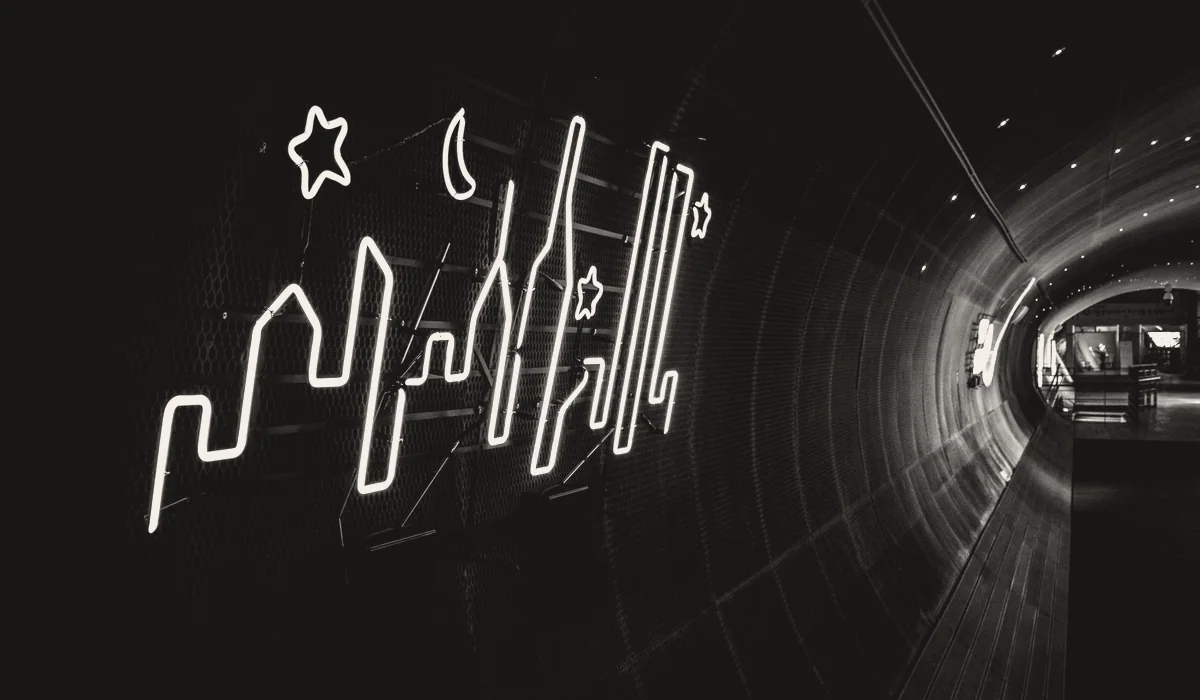
The eleven are arranged by what a form does to the process rather than by material or period. Two works can look nothing alike and run identically; two that look similar can be a year apart in programme.
The eleven types used here, against duration, budget and consent
Duration, budget and consent burden matter because each lands on a different person: duration on whoever maintains the work, budget on whoever signs the order, consent on whoever manages the programme.
| Type | Typical intended life | Indicative budget band | Consent burden |
|---|---|---|---|
| Freestanding sculpture | 25 years or more | £8,000 to £150,000, landmark works £250,000 upward | High: planning permission, structural design, foundations |
| Architecturally integrated work | Life of the building | No band: the net difference against the building trade it replaces | Medium: folded into the building's own consent and warranty |
| Mural and painted work | 2 to 25 years | £2,000 to £20,000 | Low to medium: owner's consent, access, conservation area rules |
| Light work | 10 to 20 years | £15,000 to £250,000 | Medium to high: power supply, light spill, highways |
| Sound work | 5 to 15 years | £10,000 to £120,000 | Medium: noise assessment, power, hours of operation |
| Water feature | 20 years or more | £50,000 to £1m and above | High: water quality, drainage, a permanent revenue cost |
| Landscape and land art | Decades, changing as it goes | £30,000 to £750,000 | High: land control, ecology, ground conditions, drainage |
| Functional work: seating, gates, paving, railings | Life of the surrounding fabric | £5,000 to £200,000 | Medium: must also pass as street furniture and be adoptable |
| Temporary and event work | 1 day to 12 months | £1,500 to £25,000 | Low to medium: temporary consent, event licence, insurance |
| Socially engaged and participatory work | Months to years of process | £10,000 to £150,000 | Low physically, high on safeguarding and governance |
| Digital and screen based work | 3 to 10 years | £20,000 to £300,000 | Medium to high: planning treats screens strictly, plus obsolescence |
Permanent types and the obligations they create
Permanent types create obligations that outlast everyone who signs the contract, which is why they cost what they do. A freestanding sculpture needs a structural engineer, a wind loading calculation, a foundation design responding to a ground investigation, and a planning permission that treats it as a building operation. A water feature needs all of that plus a revenue line for pumps, filtration and treatment for as long as it runs, the cost that quietly kills them: switching a fountain off is commoner than removing one.
Architecturally integrated work looks like the exception, and in one respect it is. Because the artwork is part of the building, it rides on the building's consent, warranty and construction contract, which takes a planning application out of the programme. It replaces it with a harder problem: the artist is a subcontractor inside somebody else's construction programme, working to their tolerances, sequencing and sign off, and cannot be a fortnight late without the argument becoming contractual.
Functional work sits between the two. Seating, gates, paving, railings and bridge parapets have to satisfy the artist and the authority that will adopt them, which means British Standards, slip resistance, gap widths and maintainability. A gate is judged as a gate first. Artists new to this are surprised how much of the design is decided by a highways officer rather than the panel that chose them.
Temporary public art projects and how the process changes
Temporary public art projects remove the two heaviest stages and add two lighter ones. Planning permission for a permanent structure is often replaced by a temporary permission or permitted development rights, and the maintenance obligation by a decommissioning plan naming who removes the work, when, and at whose cost. What is added is licensing and logistics: event licences, road closures, stewarding, public liability cover, weather contingency.
Temporary work also changes what is being bought. A one year installation can accept a material with a five year life, which opens the form to timber, textile, paper, projection, plants and performance, none of them available to a permanent brief at the same money. A small budget with a genuine ambition usually buys more as a serious temporary piece than as a permanent one nobody can afford to make well.
The recurring mistake is the temporary work that quietly becomes permanent because nobody removed it. A timber structure specified for eighteen months and still standing after seven years is a liability with no inspection regime and no named owner.
Participatory and process led types
Participatory and process led types shift the centre of gravity from the object to the programme that produces it. A socially engaged commission buys artist time in a community, a school, a ward or a workplace over months, and the outcome may be a ceramic panel, an archive, a book, a performance, or nothing durable. The budget looks different: fabrication may be under a fifth, with artist time, participant costs, workshop materials, venue hire and evaluation taking the rest.
The consent burden also moves. Little to apply for, a great deal to govern: safeguarding checks for work with children or vulnerable adults, data protection for anything recorded, informed consent for photography, and clarity about who owns the copyright in work made jointly with participants. The last is habitually left until the exhibition and should be settled in the brief.
Choosing a type from the brief, not the other way round
To choose a type honestly, read the three constraints before the ambitions: the money available, the date something must be visible, and how long the site owner will accept responsibility for it. Those three numbers rule out most of the table on their own. A £15,000 budget with a nine month deadline and no revenue maintenance line is a mural, a temporary work, a participatory project or a small freestanding sculpture, and no panel discussion adds a fifth.
Where a commissioner genuinely does not know which type fits, write the brief open on form and specific on constraint: state the place, the money, the programme, the intended life and the maintenance regime, and let the artists propose the type. Briefs that specify a bronze figure and then invite creative proposals ask two incompatible things, and the panel discovers it in the shortlisting meeting.